martes, 30 de diciembre de 2014

How to create a Purgatory Company in a few easy steps


Now that you have decided that this business model is right for you, you might need some guidelines. These are a few general rules that you must follow to properly run a Purgatory company:

1. Pay wages below the market average (at least 30% below). It is better if you pay a mixed wage (fixed + incentives), because you push the fixed cost even lower. It is very important to tie incentives  to a high level of sales, high enough that you will feel comfortable enough to pay them once your employees achieve this goal (if they ever do).


2. Develop an obsession for details and micromanagement. Always give specific instructions about how a task should be done, then write it down (use a task manager software like outlook) and follow the execution of each task exhaustively. 


3. Program frequent meetings to review these tasks. Do not let anyone interrupt the meeting until you are done reviewing each task. You should get very angry if a tasks is left aside by your employees, and you should always ask for deadlines on each and every single task. Once you are done with your tasks list, ask if there are more matters worth of following up. Write the ones that you consider pertinent, and program another meeting to review them all once again. Never erase a task from your list, even if your employees swear by their mothers that it has been completed. Wait until you can verify it by yourself. Always store your completed tasks for future reviewing.


4. Use your employees' sins against them. Remember that your employees were picked up from Hell (they would not had accepted the job if they came from Heaven). Never trust them and always point at them every mistake they make. Use their sins against them: humiliate the prideful, demotivate the gluttons, confront the wrathful, blame the vain for the slothful's omissions and do not let the slothful go on vacations. 


5. Every once in a while say something that keeps them on their toes. Something like "I am expecting a greater effort from your part" or "You should look for a better solution". Then dismissed the person before he can argue. It works better if you say it as you pass by, or if you say it to someone who just interrupted a meeting. Be sure to send the person away with the arguments still stucked in his head. You will know that this strategy worked out if the employee lost sleep thinking in what you told him.


6. Ambiguity. Even if you ask your employees for "crystal clear" answers, never, and I mean never ever, give a "crystal clear" answer yourself when talking about economic matters. Do not share how much the company earns or how much you earn. Keep the information fragmented, so that no one sees the full picture but yourself. Incentives must be hard to calculate and subjected to plenty conditions. It is better if every department has slighty different goals, this will cause friction, prevent unity and give you another reason for complianing in meetings.


7. Impossible results. Always demand impossible results: better, faster and cheaper. Do not settle for anything. If your employees happen to achieve a goal, congratulate (a little) and ask for more. Always look for the black spot, the bean in the rice, the fly in the white wall, the stain in the silver lining ( you get the point). If you feel like you need to give a motivational speech, always finish it with a "but..."


8. Never tell your employees that they are in a Purgatory. Every once in a while speak about the bright future that the company has and how this future guarantees stability and may impact their income (be as ambiguos in the income part as possible).


9. Refuse any type of debt. A Purgatory can not subsist if you put debt on its financial statement. Debt will put an extra stress on yourself, and (God forbids) you may be forced to depend upon your employees. Debt makes you want to sell more, which makes you more dependent on your sales force. If your employees detect this weakness, they will ask for more money and better working conditions, and your Purgatory model will be doomed. Also, debt will make you grow faster and you may loose control of your micromanagement. Never loose any type of control. Purgatories must grow slowly ( way  below the industry's average) to secure permanence.


10. Be disciplined. Remember, you chose permanence over greatness, do not loose that goal. You will be subjected to many temptations and you may get confused once in a while, thinking that you can have both. NO WAY, this is not the USA, this is Latin America, and nothing great survives more than two presidential periods (unless you are hand picking every president). Refuse greatness in every chance: refuse lectures, refuse fancy offices, refuse to have a great logo or a catchy tagline, refuse to show off, refuse to change the world, refuse to be an example, and so on.


11. Do no read any more articles about business. Specially if they come from a First World Author. None will fit your company and you will be wasting your precious time.


Lastly, do not expect me to congratulate you if you make that Purgatory company of yours everlasting. There is not anything substantial in it.

Thanks for reading

miércoles, 17 de diciembre de 2014

PURGATORY: A BUSINESS MODEL


            “Heaven is a place on earth”, sang Belinda Carlisle in the 80’s. The same goes for Hell, according to the band Kutna Hora and their 2002 single. If both places are on earth, Purgatory should be too; if it exists.

            Heaven could be described as an environment where someone would be extremely motivated on a constant basis. A great work could be that place. Most people would not consider working to be a part of heaven, but really, how many of us actually stand more than a month of vacation? Moreover, what could be more motivational than constantly achieving new goals through satisfying work? (Or a satisfying business, or project, or NPO).


            On the other hand, Hell is the total absence of any motivation, and to some inhabitants of the western world, Hell equals a shitty job. However, in a developing country, Hell equals no job at all, and this reality is the fertilizer for “ruthless” companies in these countries.


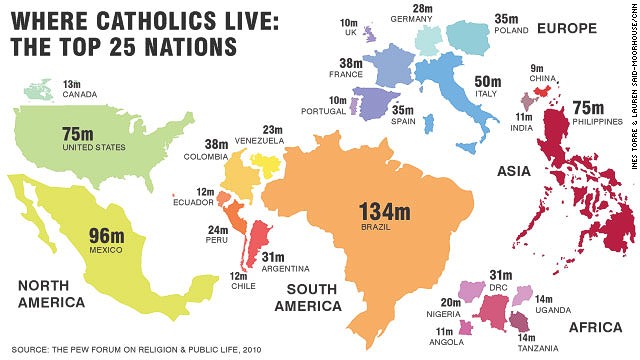
            Most people in rich countries do not believe in the existence of a purgatory. Things are monochromatic; you are either in Heaven or Hell. In Latin America, home of only one High-Income OECD member and almost 40% of the World’s Catholics, the existence of Purgatory is a common belief, and part of our daily life.


People from Central America migrate from that economic Hell to the promise of the American Heaven, and they have to go through the Mexican Purgatory. Before marrying your future wife, you have to go through a kind of purgatory meeting your in-laws (and being accepted by them). In most colleges in Mexico, you have to go through the purgatory of a thesis before you can graduate. If you want to travel to Disney, you have to go through the purgatory of getting your visa in the US Embassy. And the list goes on.

Therefore, since we are used to it, it comes as no surprise that most Latin-Americans work for a ruthless company in a purgatory type of job. And, (now is when people throw eggs at me) there is nothing wrong with these ruthless companies.

Wait… what?

            Well, like I said before, things are more complicated in developing countries. First, Hell is worse: there is a greater chance that you will fall into poverty and there is a slimmer chance that you will get out of it. Second, the economy is more biased, meaning that it would be harder to succeed as a small company and easier for the big ones to remain on top. Third, wages and social benefits have no easy way out for employers.

            For many companies, it makes more sense to become ruthless than to invest in their human capital (surviving beats thriving).


Jennifer Robin and Michael Burchell, authors of “No Excuses”, state that excuses are the only things limiting managers from transforming workplaces. And I will say that is 100% accurate in a free economy. In Latin America there is one more thing obstructing the way: a greater risk that obscures the owners’ vision.

 A few more notes before I dig deeper into this matter:


  • It is extremely hard and expensive to go public in Latin America, and here is a great article about it. 
  • Economic instability weighs in every decision (and the fear of it weighs more). 
  • The greater (and bigger) a company becomes in Latin America, the higher the risk for owners to suffer from extortion, kidnaps and government audits. 
  • Most owners hate reading in English, and when they do, they do not believe what they read. Many of them follow an 18th century style of management. 
  • And let us not forget corruption, Latin America’s FastPass®.


As a company’s leader in Latin America, you have two options: lead your company to greatness or lead it to permanence.  In the US, for example, leaders do not have two options; they have to lead their company to greatness in order to maintain its permanence.

But, like I have been saying all along, that is true in a free economy.

If you decide to lead your company to greatness, you will have to hire the best and more expensive professionals, face brutal competition from bigger companies and be the subject of a more intense scrutiny by the government and (possibly) the media.

The risk of failing will be greater for your company as well. Nevertheless, some leaders just do not give up.


If you decide to lead your company to permanence, you will have to hire cheaper professionals with many flaws and you will have to micromanage them accordingly and unmercifully. Nobody will mind you, because you are not going to sell much anyway. And, here is the best part, you will always have something to complain about, making you look like you are not doing ok. This has the extra benefit of making you look less attractive for thieves, swindlers and bureaucrats.

The bad part is that this model diminishes your health and well-being, so be sure to buy a good medical insurance plan.

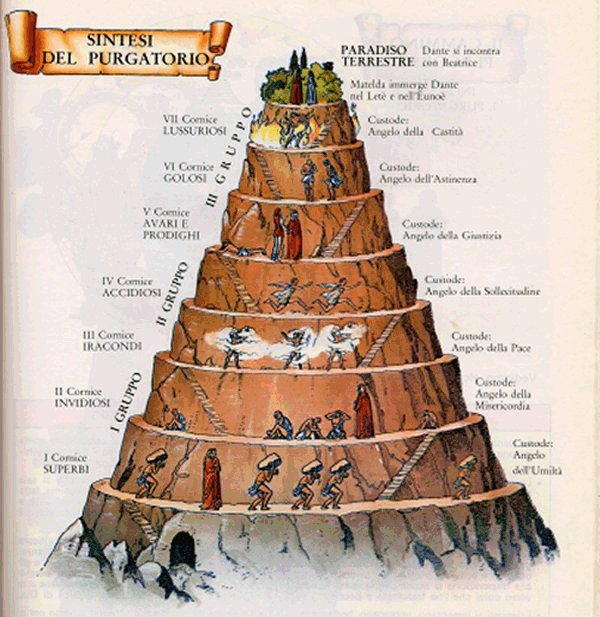
Now, if you are not a leader, but an employee working for a ruthless company, you should acknowledge your sins and work your way out of the purgatory. Dante believed that you cannot remain for too long in the purgatory, you either learn and move on or you are sent back to Hell. Need some directions? You can start here.

If you are a First World citizen trying to understand that shortsighted company that brought you to Latin America, well, I hope this helps.

Lastly, if you are a business consultant or a manager that wants to transform a ruthless Latin American company into a great one, be patient. It may take a while.

(Special thanks to Burke Murphy for editing this text)