
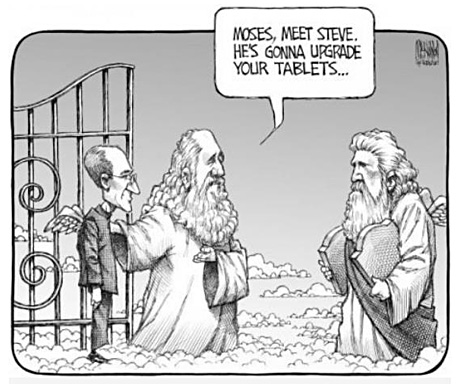
Heaven could be described as an
environment where someone would be extremely motivated on a constant basis. A
great work could be that place. Most people would not consider working to be a
part of heaven, but really, how many of us actually stand more than a month of
vacation? Moreover, what could be more motivational than constantly achieving
new goals through satisfying work? (Or a satisfying business, or project, or
NPO).

On the other hand, Hell is the total
absence of any motivation, and to some inhabitants of the western world, Hell
equals a shitty job. However, in a developing country, Hell equals no job at all,
and this reality is the fertilizer for “ruthless” companies in these countries.


Most people in rich countries do not
believe in the existence of a purgatory. Things are monochromatic; you are
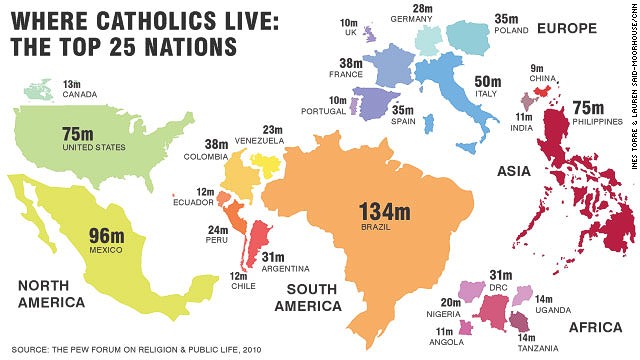
either in Heaven or Hell. In Latin America, home of only one High-Income OECD member
and almost 40% of the World’s Catholics, the existence of Purgatory is a common
belief, and part of our daily life.

People
from Central America migrate from that economic Hell to the promise of the
American Heaven, and they have to go through the Mexican Purgatory. Before
marrying your future wife, you have to go through a kind of purgatory meeting
your in-laws (and being accepted by them). In most colleges in Mexico, you have
to go through the purgatory of a thesis before you can graduate. If you want to
travel to Disney, you have to go through the purgatory of getting your visa in
the US Embassy. And the list goes on.
Therefore,
since we are used to it, it comes as no surprise that most Latin-Americans work
for a ruthless company in a purgatory type of job. And, (now is when people
throw eggs at me) there is nothing
wrong with these ruthless companies.
Wait…
what?
Well, like I said before, things are
more complicated in developing countries. First, Hell is worse: there is a
greater chance that you will fall into poverty and there is a slimmer chance
that you will get out of it. Second, the economy is more biased, meaning that
it would be harder to succeed as a small company and easier for the big ones to
remain on top. Third, wages and social benefits have no easy way out for
employers.
For many companies, it makes more
sense to become ruthless than to invest in their human capital (surviving beats
thriving).


Jennifer
Robin and Michael Burchell, authors of “No Excuses”,
state that excuses are the only things limiting managers from transforming
workplaces. And I will say that is 100% accurate in a free economy. In Latin
America there is one more thing obstructing the way: a greater risk that
obscures the owners’ vision.
A few more notes before I dig deeper
into this matter:
- It is extremely hard and expensive to go public in Latin America, and here is a great article about it.
- Economic instability weighs in every decision (and the fear of it weighs more).
- The greater (and bigger) a company becomes in Latin America, the higher the risk for owners to suffer from extortion, kidnaps and government audits.
- Most owners hate reading in English, and when they do, they do not believe what they read. Many of them follow an 18th century style of management.
- And let us not forget corruption, Latin America’s FastPass®.
As
a company’s leader in Latin America, you have two options: lead your company to
greatness or lead it to permanence. In
the US, for example, leaders do not have two options; they have to lead their
company to greatness in order to maintain its permanence.
But,
like I have been saying all along, that is true in a free economy.
If
you decide to lead your company to greatness, you will have to hire the best
and more expensive professionals, face brutal competition from bigger companies
and be the subject of a more intense scrutiny by the government and (possibly)
the media.
The
risk of failing will be greater for your company as well. Nevertheless, some leaders
just do not give up.


If
you decide to lead your company to permanence, you will have to hire cheaper
professionals with many flaws and you will have to micromanage them accordingly
and unmercifully. Nobody will mind you, because you are not going to sell much
anyway. And, here is the best part, you will always have something to complain
about, making you look like you are not doing ok. This has the extra benefit of
making you look less attractive for thieves, swindlers and bureaucrats.
The
bad part is that this model diminishes your health and well-being, so be sure to
buy a good medical insurance plan.
Now,
if you are not a leader, but an employee working for a ruthless company, you
should acknowledge your sins and work your way out of the purgatory. Dante
believed that you cannot remain for too long in the purgatory, you either learn
and move on or you are sent back to Hell. Need some directions? You can start here.
If
you are a First World citizen trying to understand that shortsighted company
that brought you to Latin America, well, I hope this helps.
Lastly,
if you are a business consultant or a manager that wants to transform a
ruthless Latin American company into a great one, be patient. It may take a
while.
(Special thanks to Burke Murphy for editing this text)
(Special thanks to Burke Murphy for editing this text)

No hay comentarios:
Publicar un comentario